|
| .: Derby Castle Ballroom |
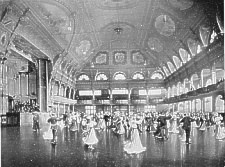 The Derby Castle Ballroom in Douglas was the Isle of Man’s largest hall for gatherings until its closure in 1955. The Derby Castle Ballroom in Douglas was the Isle of Man’s largest hall for gatherings until its closure in 1955.
It was a huge, grand and elegant hall, built in the early 1800s as a party room for guests of the Duke of Derby who held lavish banquets there.
As the aristocracy of the Isle of Man faded, so their property fell into the hands of private businesses, and the ballroom became a popular dinner and dance venue.
But on August 6, 1955, the ballroom’s owners made a dreadful mistake. It wasn’t unusual for more than one party to be held in the room at the same time (given its size).
That night, the room had been booked for functions by two historic Manx organisations… the Isle of Man Society for the Wives of Wall Builders and the Manx Institution of the Wives of Isle of Man Doormakers.
Both were deadly and bitter rivals after a disagreement in 1843 between the wife of John Quilliam, a wall builder, and the spouse of Derek Quine, a doormaker. Both were in trades that considered the other a waste of time, and their wives took similar views of each other.
Jennifer Quilliam and Edna Quine detested each other with a ferocity that ensured each time they met a reporter from the Mona’s Gazette would come away with a fine story for the gossip or social column.
That night in August was to be no different, although nobody knows exactly how the altercation began. Some say Jennifer trod on Edna’s dress whilst dancing, others say Edna tripped Jennifer during a foxtrot.
Either way, both ladies were soon yanking at each other’s hair and ripping each other’s clothing – locked into a mortal battle royale on the sprung wooden dance floor. Within minutes, their fellow wives had joined the fray, leading to the worst rioting in the Isle of Man since the Duke of Athol introduced the infamous Speaking Tax three hundred years earlier.
The police were called, and eventually separated the ladies using dogs, batons and the butts of their service revolvers. Nobody faced any criminal charges over the incident as it was unclear who had done what to whom… but the ballroom was closed down a few days later by a special sitting of Douglas magistrates. It remained empty and unused until its demolition in the 1980s.Labels: Derby Castle Ballroom, Douglas, isle of man, Isle of Man Society for the Wives of Wall Builders, Manx Institution of the Wives of Isle of Man Doormakers.
Written at 15:20 by
G
5
comments |
|
| .: Fluffy bunny tale |
 The only full skeleton of an Isle of Man Rabbit ever discovered is currently on show at the Manx Museum. The only full skeleton of an Isle of Man Rabbit ever discovered is currently on show at the Manx Museum.
The specimen is almost four feet tall to the shoulder and was given the latin name cuniculus manximia when it was discovered by archaeologists at Scarlett Point in Castletown in 1962.
The skeleton caused great controversy in the scientific world when it was unearthed by Dr Graeme Qualtrough. He claimed the sheer size of the rabbit meant it was likely to have been the common ancestor of many other Manx mammals, including the Island’s trademark tailless cats.
However, German professor Dr Klaus von Vaffelschnauss was in the Isle of Man at the time and decided to investigate the Scarlett site further. He managed to find two complete human skeletons in strata which was 23 million years old. This led him to postulate the theory that somehow a Manx time machine had been invesnted, its creators had travelled into the past and bred the rabbits for food.
More recently, advances in DNA sampling and genetic technology allowed boffins to clone the rabbit from ancient traces of marrow. They hoped to settle the argument about the animal’s origin once and for all.
But there was great dismay when researchers discovered their specimens missing on the day they were due to mature into adults – and the reinforced cages were severely damaged.
A further batch was created – but in the meantime some leading biologists at the Manx government laboratories claimed the rabbits suffered from an extreme allergenic reaction to sunlight and had exploded as dawn filtered through the windows. This, they said, explained the rarity of the fossils and the animal’s sudden (almost overnight) extinction.
A round-the-clock watch was put on the ancient bunnies, which were kept in a sealed room covered by more than twenty CCTV cameras. This led to one of the most incredible scientific breakthroughs of the twentieth century as the cameras captured the rabbits vaporising with an actinic flash.
Later analysis showed the rabbit’s hadn’t in fact exploded – but they had disappeared. Further scans of the laboratory showed they had spontaneously travelled backwards in time.
A bug in the DNA replication was blamed for the phenomena, and there was a huge amount of scientific activity as various investigators attempted to discover whether the principle could be used to send humans backwards in time.
But the first experiment on a single-celled amoeba proved disastrous when the entire laboratory was all but destroyed in a huge explosion which not only destroyed the subject but also vaporised all of the research data.
Fortunately, nobody was hurt in the blast, but to this day the question remains whether the rabbits existed before the scientists managed to send two batches of them back into the primeval ages.Labels: Douglas, isle of man, manx, manx rabbit
Written at 16:04 by
G
1
comments |
|
| .: Marine Drive |
 Marine Drive (pictured) connects Douglas to Port Soderick on the East coast of the Isle of Man. It was originally built in 1741, although records of an ancient path go back to Viking times. Marine Drive (pictured) connects Douglas to Port Soderick on the East coast of the Isle of Man. It was originally built in 1741, although records of an ancient path go back to Viking times.
The 18th century road was remarkable because it used a particular type of green stone which (in the British Isles) is only found at one particular quarry in Kirk Michael. When it gets wet, it turns translucent and looks like glass.
The road survived for only ten years before strong rains washed it away over the cliff edge. Its remains can still be seen by marine salvage crews who trawl along the cliffs two hundred metres below the road.
Marine Drive was almost abandoned – it lay in disarray until 1837, but the burghers of Douglas were fans of modern engineering and so invited Isambard Kingdom Brunel to come and construct the eighth wonder of the world.
Being a practical man, Brunel took one look and balked at the precarious clifftop path. Being a religious man, he didn’t use foul language but he left the burghers in no doubt as to what he thought of the idea of building a road there.
There was, however, a woman who was slightly less interested in safety and who had a preoccupation with vertigo. Manx engineer Charity Qulliam set to work breaking stones and laying them over the hillside which bordered Marine Drive. After forty backbreaking year of hard labour, she finally completed her masterwork in 1879 – just in time for the 900th anniversary of Tynwald.
The road was opened with much fanfare, and record crowds attended the ribbon-cutting ceremony. The path was marvelled at far and wide, and survived well into the modern age.
Of course, being such a crude design meant it had never been designed for motor vehicles and so in 1994 the Manx government decided enough was enough. After a string of unfortunate accidents, Marine Drive was closed, and remains so to this day.Labels: Charity Quilliam, Douglas, Isambard Kingdom Brunel, marine drive, Port Soderick
Written at 13:58 by
G
0
comments |
|
| .: Manx palm trees |
 Field Marshal Thrumplock O’Crackerley (pictured) came to live in the Isle of Man in 1904 after a lifetime spent in the service of the British Army. Field Marshal Thrumplock O’Crackerley (pictured) came to live in the Isle of Man in 1904 after a lifetime spent in the service of the British Army.
His career had been to say the least undistinguished up to that point, after he’d presided over some of the worst military debacles in the Boer War. He was perhaps best known in martial circles for ordering a troop of cavalry to charge into the sea in pursuit of a small gunboat which had been shelling his command post on a beach.
But O’Crackerley will forever be remembered in the Isle of Man as the man who introduced the Manx palm tree.
He’d discovered the hardy tree whilst on a leave of absence in New Zealand. O’Crackerley was profoundly deaf and also colour-blind, which led him to identify English soldiers stationed in New Zealand as Chinese. His lack of knowledge of world politics also led him to believe that Britain was currently at war with the Oriental power, and so one morning after an especially heavy rum-drinking session in Auckland, he awoke with the unshakeable conviction New Zealand had been invaded.
Only after he’d sabotaged a large number of cannon (leading to mayhem when the garrison attempted to fire 12 guns to sound midday) and nailed shut the door of the barracks was he finally arrested and subdued.
Of course, it’s difficult for officers to discipline a Field Marshal and so O’Crackerley was placed under house arrest. The Colonel in charge of the operation managed to convince O’Crackerley he was needed for secret war work which consisted of growing palm trees. He explained to the Field Marshal that the only way to win a war against China would be to carry out guerrilla operations and in order to do this New Zealand would first have to be turned into a jungle.
The plan made sense to O’Crackerley’s withered faculties and he set about developing a strain of palm which would grow almost anywhere under any climatic conditions.
Of course, when the British High Command was informed of O’Crackerley’s madness, they decided he was simply too dangerous to be allowed to wander freely through the Empire – and yet they couldn’t publicly admit such a high-ranking officer was feeble-minded.
Instead, they decided to post him safely out of harm’s way on the Isle of Man, where they told him he could carry out the necessary botanical research to complete his project.
For a number of years, he lived in Kirk Michael in a small compound closely guarded by British military intelligence. He was a modest man with few vices save Navy rum, and lived quietly just outside the village.
But the day finally came when he realised he’d created a variety of palm tree which could happily live in the Gobi Desert as easily as it could thrive in Alaska. He hurriedly fired off telegram after telegram asking for permission for the tree to be widely planted across the Empire in case of Chinese attack.
Of course, the government wanted nothing to do with a plan that would turn vast swathes of the globe into impenetrable jungle on the whim of a madman, and so they repeatedly refused permission – telling O’Crackerley that to begin planting would be to alert the Chinese.
Working in secret even from those guarding him, O’Crackerley came up with a plan. As a keen walker, he would often hike up the side of Snaefell carrying a soldier’s full combat kit (“Have to keep fit, man, just in case the yeller devils get here,” he wrote in his diary). Slowly but surely, he put his scheme into action.
On the summit of Snaefell, he managed to construct a large cannon facing vertically upwards. This he gradually packed with gunpowder he’d salvage from the ammunition he carried for his officer’s pistol. Over the course of three months in 1905, he slowly built up a charge great enough for his purposes.
On February 4 he was ready. He carried a large bag of seeds in his pack, announced he was going for a walk, and began striding up Snaefell. When he reached the summit, he took off the cannon’s protective cover and packed the muzzle with the bag of seeds. Lighting the fuse, he stood back, turned around, placed his hands over his ears and waited.
The resultant blast when the cannon exploded could be seen from the Lake District, and caused many residents of Ramsey and Douglas to believe the day of judgement had finally arrived. When a party of militia were sent to investigate, they found nothing more O’Crackerley except his hat.
But he’d accomplished the impossible – the seeds were fired into the air and over the next few days began to drift down and take root all over the Isle of Man.
To this day, you can still see the results of O’Crackerley’s demented botanical genius right across the Island, including at Ronaldsway Airport where a line of Manx palm trees was planted in 1972 to commemorate his gift to the Manx people.Labels: Douglas, isle of man, isle of man manx, palm trees, ramsey, Thrumplock O'Crackerley
Written at 15:37 by
G
3
comments |
|
| .: End of the Hu Chi Tau Band |
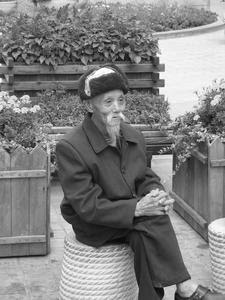 So what became of the three members of the Hu Chi Tau band? So what became of the three members of the Hu Chi Tau band?
Bicky Thwaginsack was attacked by seagulls in 1951 and never quite recovered from the experience. He was later killed when he launched himself from Douglas Head in a vain attempt to catch the seagull he thought was behind the attack.
Danko Billy Oofenthwaite gave up music and started up a mobile nightclub on board a bus. He was later arrested and jailed for operating a Wurlitzer organ under the influence of alcohol.
Whilst serving his time in Victoria Road jail in Douglas, he met several prominent Manx gangsters including Juan “Crossword puzzle” Quaggin. He taught Danko Billy the art of scamming crossword compilers with unsolveable clues. Shortly after Danko Billy was released, he was the ringleader in the notorious “23 down” scam.
That eventually led to the American Crossword Society putting out a contract on his life. For a time, he hid in Port Soderick, living in damp caves and eating nothing but shells and pebbles.
Eventually, he discovered the identity of those behind the plot and hired Manx Witch Umbar Creggin to lay a curse on the entire American Crossword Society which resulted in the entire organisation disappearing without trace almost overnight.
Pleased with his success, Danko Billy attempted to perpetrate a virtually identical fraud against the DeutscheKreuzworträtselGesellschaft based in Frankfurt. This time, however, he was not so lucky and the Germans found him. His body was never recovered.
Moirander Leventheep lives on to this day, a broken and bitter man. In 2003 he suffered a breakdown which left him convinced he rules over anybody in the Isle of Man with a J in their name.
Leventheep keeps himself to himself, although he does make occasional public appearances. The photograph above shows him at an impromptu press conference he gave to announce he’d invented time and was suing the Manx Government for copyright infringement. The case was later thrown out, and Leventheep was forced to pay the costs of both sides of the case.
He can still be found begging in Strand Street to this day.Labels: bicky thwaginsack, crossword, danko billy oofenthwaite, Douglas, Hu Chi Tau Band, humour, isle of man, manx, moirander leventheep, strand street
Written at 17:11 by
G
1
comments |
|
| .: More of the Hu Chi Tau Band |
PART TWO
 Between 1935 and 1939, the Hu Chi Tau Band managed to appear on radio stations no less than four hundred times, often playing accompaniment for other artistes such as vaudeville comedian Big Tommony Tonky and mime artist Leuf Le Feu. Between 1935 and 1939, the Hu Chi Tau Band managed to appear on radio stations no less than four hundred times, often playing accompaniment for other artistes such as vaudeville comedian Big Tommony Tonky and mime artist Leuf Le Feu.
Such was their popularity that during one impromptu gig performed on the dockside in Liverpool, they had to be whisked away by police after a crowd of passengers from a trans-Atlantic liner threatened to tear them limb from limb in efforts to secure a piece of clothing from the trio.
When war broke out, all three did their patriotic duty and volunteered to fight, signing up with the British Army on the first day of hostilities. In keeping with the times, all were sent for basic training, where their talents were spotted. They became part of Field Marshal Bernard Montgomery’s personal retinue. Their job was to provide musical tunes as the backdrop to his travelling drag revue – a motley collection of criminals and hangers-on who’d somehow managed to wangle themselves a place far from the front lines.
This came to an abrupt end in December 1939 when police in London raided a vice den in Kensington and arrested all present – including the Field Marshal, his secretary, mistress, transvestite dancers and the Hu Chi Tau Band.
Few charges were ever brought as the government stepped in to prevent a morale-sapping scandal from engulfing the nation, and the band was given an honourable discharge and sent back to the Isle of Man, where they resumed their season at the Creg-ny-Mallaughinagh theatre.
Here, they found themselves surrounded by foreign nationals who’d been interned in camps such as Howstrake at the start of the war. The internees were mostly Italian and German, with a smattering of Norwegian, French and Tongan. The rich mixture of musical influences this provided is evident in their musical output at the time.
But while they appreciated their newfound fans, they were also sampling the delights of foreign pleasures. Rumours of drug-taking were rife, and the Hu Chi Tau Band’s backstage parties were said by some to have assumed the proportions of Dionysian orgies of free sex and opium smoking.
As word of this filtered around the Isle of Man, servicemen from the RAF base in Jurby began sneaking out of their barracks to see the band for themselves. Eventually, the commanding officer found out and he ordered the military police to take action.
And so, in 1943, armed soldiers entered the theatre and found a frightful scene. Recently released military files contain the reports of the operation leader, Colonel Jim “Bastard” McFrancken. In his words:
"Upon entering the premises, I was struck by an odd odour which one of my men quickly identified as oriental hashish mixed with French perfume and Opium from Cathay.
"As ordered, we conducted a full search and executed on the spot any man found to be wearing undergarments suited to women or any man engaged in unnatural practices. They yammered and screamed, but we did our duty by God. That evening, we dug graves for 87 men –though I prefer to think of them as wretched beasts that crawled upon the land as an affront to Her Majesty the Queen."
Inevitably, this all but finished the career of the Hu Chi Tau Band.Labels: Douglas, field marshal bernard montgomery, Hu Chi Tau Band, isle of man, manx, monty
Written at 16:41 by
G
0
comments |
|
|
|




You might want to check out your technorati. I linked your blog and namechecked in a post, but don't think the authority has been added to yours."