|
| .: Manx tartan |
 The Manx tartan was invented in 1890s after a long-running battle between the ladies of the Island about who could dress the most stylishly on Tynwald Day. The Manx tartan was invented in 1890s after a long-running battle between the ladies of the Island about who could dress the most stylishly on Tynwald Day.
At the annual ceremony in St John’s, it became fashionable for women to wear larger and larger hats to outdo each other. The picture was taken in 1885 and shows Mrs Athenboggle Quirk, who was married to Ayre MHK Fuartangle Quirk.
But the practice had to be regulated after 1887 after a fresh breeze sprang out of the West halfway through the procession of the worthies to Tynwald Hill from the Royal Chapel.
The scale of the hats was out of all proportion to the ability of the human neck to resist, and the wind took hold of the enormous pieces of millinery.
The result was tragedy – eight ladies dead from snapped necks caused by the wind and weight of their hats, and another fifteen seriously injured.
In the aftermath, the more sensible men of Tynwald passed a resolution strictly controlling the size and weight of hats that may be worn on the Island’s national day.
The laws survive to this day, making it illegal for a lady to wear a hat ‘whose highest point doth stand more than three handspans above the highest point of the eyelash’.
In response, the Laxey Woolen Mills created the Manx tartan, a mixture of green, blue, gold, purple and white, and sold a variety of hat designs in the fabric.
Officially, the colours were chosen to fit the following rhyme:
Blue for the Sea,
Green for the hills,
Gold for the gorse,
Purple for the heather,
White for the cottages.
But some Victorian wag quickly adapted the poem and has this alternative version published in the Mona’s Gazette letters pages:
Blue for the mood,
Green for the seasickness,
Gold for the banks,
Purple for the writing of TE Brown
White for the Island bled dry by the English
Although the original poem did survive to the present day, the latter is more widely used in the Isle of Man to describe the tartan pattern.Labels: isle of man, manx, tartan, tynwald
Written at 16:12 by
G
4
comments |
|
| .: Derby Castle Ballroom |
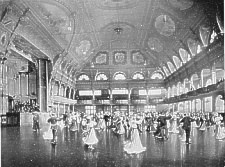 The Derby Castle Ballroom in Douglas was the Isle of Man’s largest hall for gatherings until its closure in 1955. The Derby Castle Ballroom in Douglas was the Isle of Man’s largest hall for gatherings until its closure in 1955.
It was a huge, grand and elegant hall, built in the early 1800s as a party room for guests of the Duke of Derby who held lavish banquets there.
As the aristocracy of the Isle of Man faded, so their property fell into the hands of private businesses, and the ballroom became a popular dinner and dance venue.
But on August 6, 1955, the ballroom’s owners made a dreadful mistake. It wasn’t unusual for more than one party to be held in the room at the same time (given its size).
That night, the room had been booked for functions by two historic Manx organisations… the Isle of Man Society for the Wives of Wall Builders and the Manx Institution of the Wives of Isle of Man Doormakers.
Both were deadly and bitter rivals after a disagreement in 1843 between the wife of John Quilliam, a wall builder, and the spouse of Derek Quine, a doormaker. Both were in trades that considered the other a waste of time, and their wives took similar views of each other.
Jennifer Quilliam and Edna Quine detested each other with a ferocity that ensured each time they met a reporter from the Mona’s Gazette would come away with a fine story for the gossip or social column.
That night in August was to be no different, although nobody knows exactly how the altercation began. Some say Jennifer trod on Edna’s dress whilst dancing, others say Edna tripped Jennifer during a foxtrot.
Either way, both ladies were soon yanking at each other’s hair and ripping each other’s clothing – locked into a mortal battle royale on the sprung wooden dance floor. Within minutes, their fellow wives had joined the fray, leading to the worst rioting in the Isle of Man since the Duke of Athol introduced the infamous Speaking Tax three hundred years earlier.
The police were called, and eventually separated the ladies using dogs, batons and the butts of their service revolvers. Nobody faced any criminal charges over the incident as it was unclear who had done what to whom… but the ballroom was closed down a few days later by a special sitting of Douglas magistrates. It remained empty and unused until its demolition in the 1980s.Labels: Derby Castle Ballroom, Douglas, isle of man, Isle of Man Society for the Wives of Wall Builders, Manx Institution of the Wives of Isle of Man Doormakers.
Written at 15:20 by
G
5
comments |
|
| .: Rats and Longtails |
 The Manx gaelic language of the Isle of Man is unusual because for a thousand years it had no letter M. The Manx gaelic language of the Isle of Man is unusual because for a thousand years it had no letter M.
In the early days of Christianisation, the letter was considered unlucky because it was number 13 in the alphabet and the more religious and superstitious types felt that made it ungodly.
In recent times, the letter has been reinstated, but this was part of the reason the Isle of Man was named Ellan Vannin rather than Mannin for so long.
Another popular superstition is the refusal by Manx people to say the word “rat”. This came about in the 1600s after the Duke of Athol, Sir Methadonia Athol, was due to be awarded a knighthood.
He travelled to England to receive his honour from Queen Elizabeth I and returned in triumph.
Sir Methadonia left his ship anchored in Douglas Bay and clambered into a boat to be ferried to shore by the crew.
As he drew near, it became apparent most of the population of the Island had gathered to greet him, and he stood on the prow of the boat, waving vigorously.
Disaster struck as he stepped from the boat to the landing jetty, when he inadvertently trod on a rat which bit his foot.
Yelping in pain, he stumbled, tripped, and fell face-first into a barrel which was waiting to be taken to the ship.
He broke his nose, and, under ancient Manx law, no man with a facial disfigurement was allowed to be a ruling member of the nobility. Sir Methadonia was forced to step down and hand the Dukedom to his eldest son Tastingio.
From that day forward, it’s been considered unlucky for any person to say the word “rat” in the Isle of Man. Upon hearing the word uttered, it’s customary to tug a forelock, knock on wood and whistle.
Instead, you can say "longtail" or "skippo".Labels: duke of athol, isle of man, manx, rats
Written at 16:06 by
G
2
comments |
|
| .: The Running of the Welshman |
 Of all of the customs and ancient holidays ever celebrated in the Isle of Man, the most notorious was the Running of the Welsh. Of all of the customs and ancient holidays ever celebrated in the Isle of Man, the most notorious was the Running of the Welsh.
It was outlawed early on in the 1900s but had been marked each May 9 for a hundred years or so.
Legend has it that a Welsh invasion fleet foundered off the coast of Port Soderick during the Viking reign of the Island, and only one of the Welsh warriors managed to make it ashore.
He was quickly spotted and chased Northwards across the Island to Laxey where he was finally captured and executed.
Each year, the worthies of the Isle of Man would gather on the summit of Snaefell with high-powered rifles, while one of the Welsh prisoners in the Island’s jail was forced to run along the Mountain. The gathered gentlefolk would each attempt to shoot him or her – and a reward of a hundred guineas was offered to anybody who could score a hit.
The prize was never won – the distances involved were huge and the odds of hitting the moving target was very slim indeed.
But the event fell into disrepute after a Welsh politician was falsely accused of public drunkenness and sent to jail. He claimed he’d been framed and had been sent to jail solely to provide a Welshman for the ceremony.
The ensuing legal case showed deep levels of corruption within the Manx legal profession, and the holiday was outlawed.Labels: holiday, isle of man, isle of man manx, Running the Welshman, snaefell
Written at 15:34 by
G
0
comments |
|
| .: Knockaloe Camp |
 Knockaloe Camp was set up in the Isle of Man in 1914 to house British citizens who were judged to mentally unstable to join the army and fight in World War I. Knockaloe Camp was set up in the Isle of Man in 1914 to house British citizens who were judged to mentally unstable to join the army and fight in World War I.
The site, in the West of the Island, was chosen because it was hidden away in a deep valley between two high hills which were covered in dense forests. The huts to contain the prisoners were built on a flat piece of cleared land, and the camp was given its own railway station.
No track was laid to the station, however, and no trains ever ran there but the internees were told the next locomotive would arrive soon and they were encouraged to wait on the platform where they were more docile and manageable.
The camp was a test site for many psychoactive drugs which were given to prisoners to judge their efficacy. It wasn’t unusual, as one Peel police report put it at the time, to see internees ‘talking to flowers, barking like dogs and attempting to flee from satanic pebbles’.
The Manx government was initially reluctant to set up the camp, but was given huge amounts of money from the UK government as part of the deal. This was used to set up many facilities in the camp to make it appear like a normal town, although as the disturbed inmates were allowed to design it whilst under the influence of mind-altering substances, it bore little resemblance to any sort of town that’s been seen before or since.
In the picture is Henry the Hat, a popular and well-known inmate who set up the camp’s Post Office. He was instrumental in the postal service which allowed inmates to send internal mail to each other – the government would not, however, allow them to send or receive mail from outside the camp.
Henry the Hat was known for his inability to judge size or perspective and often wore huge oversized flat caps. When he set up the first postal service, he was asked to design stamps and came up with a series of A4 sized postage stamps.
These can be seen clearly in the photograph and would have been illegal under Manx law because they weren’t sticky on the back, had no portrait of the Queen, and often contained tiny, printed swear words.
Today, Henry the Hat’s stamps sell for hundreds of thousands of pounds at auction, and in 1998 Sotheby’s announced one had broken the world record when his original design for the ‘Mona’s bastard Isle’ stamp sold for £8.2 million.
After the war, the camp was closed down and the Manx government found itself in charge of hundreds of mentally ill and incapable people who had nowhere to go. In response, the Isle of Man set up a new town in Upper Foxdale and housed most of the population of Knockaloe there. Many of those still live in Foxdale to this day.Labels: Foxdale, Henry the Hat, isle of man, knockaloe, manx, Peel, word war I
Written at 14:58 by
G
0
comments |
|
| .: Isle of Man Finance Sector |
 The Isle of Man’s finance sector has been the driving force of its economy since 1968, when The Beatles began salting away money offshore to escape the clutches of the British taxman. The Isle of Man’s finance sector has been the driving force of its economy since 1968, when The Beatles began salting away money offshore to escape the clutches of the British taxman.
Initially, they had little idea about money and so handed over their cash to Kerruish, Kerruish, Kerruish and Kerruish Bank.
This was run by a father, mother, son and daughter all based in a tiny cottage in Cregneash and wasn’t so much a bank as a large room which they used to store cash. There were no branches and all transactions were done in the Hells Bells pub directly opposite Battery Pier – the first hostelry you saw when alighting from a ferry.
Billy Kerruish, the father, ran all of the financial aspects of the bank (mostly counting money and drinking), while his wife Mona kept the books and drank, while his daughter Milly answered letters and drank. Finally, the son Paul drank and collected debts – usually with a cricket bat.
KKKK Bank was notoriously lax at informing the taxman about accounts it held on behalf of clients and by decimalisation in 1971 (when the above picture was taken) had roughly £4.5 billion in the cottage’s spare bedroom – which is about £60 trillion in today’s money.
But the whole scheme failed when the family tried to get rid of their pre-decimal currency and trade it in at the Isle of Man Bank for the new notes and coins. Overnight, Isle of Man bank ran out of cash and the Manx government was forced to ration money for four weeks while new currency was printed.
The Kerruish family were rumbled soon afterwards during an investigation by Tynwald and were exiled to Jersey, where they began running much the same business.
However, with billions of pounds on the books, the government couldn’t simply scrap the bank or close it down and so decided to give the UK government the bum’s rush by setting up as a proper offshore tax haven. It divided the money between a number of startup banks, lowered the tax rates, and began an era of financial glory which has lasted to this day.Labels: Battery Pier, finance sector, Hells Bells, isle of man, Kerruish, KKKK bank
Written at 16:53 by
G
1
comments |
|
| .: Manx Telecom's beginnings |
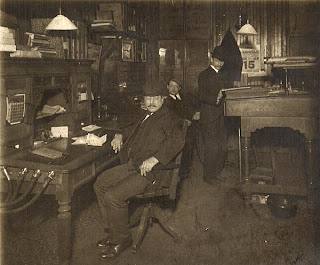 Until 1981, the Isle of Man’s telephone network consisted of thousands of miles of underground pipes and “speaking tubes”. Until 1981, the Isle of Man’s telephone network consisted of thousands of miles of underground pipes and “speaking tubes”.
Work began on the Manx All-Island Voice Intertransport System – MAVIS for short – in January 1876, just a month before Alexander Graham Bell patented his first telephone in the US.
Although the Isle of Man government had heard of advances being made in telecommunications, they were firmly of the opinion that voices carried by wires smacked of witchcraft, and so for three months hundreds of Irish migrants were put to work digging deep trenches and laying pipes ready for the technological wonder of the age.
In May 1876, the governor of the Isle of Man, Brigadier Duffus Willingteemy made the first call over the speaking tubes in front of an excited crowd who’d gathered at Government House.
A special pipe had been laid to Buckingham Palace for the call, which was to connect directly to Queen Victoria and help the Manx people feel as though they were a valuable part of the Empire.
But thanks to primitive exchange technology (the main exchange at Douglas is seen in the picture), the call was misdirected to a field on Magnetic Hill where a curious sheep held a short one-sided conversation with the governor.
The mistake wasn’t realised until the next day, as Willingteemy had assumed Her Majesty had been at the gin again. But when he realised he’d been duped, he ordered the sheep roasted and sent to the Queen’s court in London by way of apology.
Despite the shaky start, the speaking tubes continued to be used until in 1981 an enterprising computer hacker managed to connect a BBC Micro computer to the tubes with a home-made acoustic coupler. He then hacked into the computers of a major T-shirt supplier in America and ordered 10,000 shirts with the motto “Mann for the Manx – English Go Home”.
These were delivered to the Manx government’s Legislative Buildings in Douglas, sparking an outcry from the UK government which imagined the Isle of Man was about to secede from Britain.
An investigation was held, but the hacker was never caught because it was impossible to trace calls through the speaking tubes. Manx Telecom, which had been set up by the government to run the system in the 1880s, was ordered to put an end to it and install telephones instead.
This was duly done, but the tubes stay in use to this day as bundles of fibre-optic cables now run through them – connecting the Island along routes first laid down more than 130 years ago.Labels: Brigadier Duffus Willingteemy, isle of man, Magnetic Hill, manx, Manx Telecom
Written at 16:11 by
G
0
comments |
|
| .: The Isle of Man Phynnodderee |
 The photo on the left is the only documented shot of the Phynnodderee, a tortured spirit which roams the highlands of the Isle of Man. The photo on the left is the only documented shot of the Phynnodderee, a tortured spirit which roams the highlands of the Isle of Man.
It was taken in 1926 by Gideon Whitfullington-Phorcast, a housemaster at King William’s College, as he was shooting pheasants on Snaefell. He later told the Mona’s Gazette newspaper: “It was a hell of a beast, hairy and shaggy – looked a bit French if you ask me. It took one look at Lucy, my gun, and turned tail. Damned coward, what? I barely managed to get a shot off at the blighter.”
But it was that one shot that is said to have sealed Whitfullington-Phorcast’s doom. The Phynnodderee doesn’t like people who take pot-shots at him, and the teacher vanished one day whilst out rambling. He was never seen again and was said to have been taken by the Phynnodderee.
The legend surrounding the beast is an interesting one. It’s said that an Elven knight fell in love with a woman from Peel who’d given her virtue to him a little bit too easily.
Like most of the women in the Sunset City, she proved something of a nag, and was continually complaining that he was out til all hours carousing and drinking and debauching with the other faeries.
After they’d been in love for some months, it was time for the Rehollys vooar yn ouyr, the annual royal high harvest festival which was marked by a huge faerie feast at Glen Rushen.
But his Manx fishwife refused to let him go and made him stay in their house at Peel to put up shelves, change fuses and other such petty tasks. But this was his downfall – his absence offended the Elfin King, who cursed him and banished him from the faerie kingdom forever.
Now, he lives on, undying, doomed to wander the Manx mountains as a strange, sad, solitary wanderer. He is said to be something between a man and a beast, covered with black shaggy hair and having fiery eyes. Many stories are related by the Manx peasantry of his prodigious strength and his never-ending quest for the hidden gates to the faerie kingdom.
Still more stories are told about English fools who arrive in the Isle of Man to hunt the Phynnodderee and the hidden treasure of the dowry he never had the chance to pay for his wife. Seeking out the Phynnodderee, it’s said, is like asking the Devil to turn Hell’s heating up.Labels: faerie, fairy, Gideon Whitfullington-Phorcast, isle of man, isle of man manx, king william's college, legends, Mona’s Gazette, Peel, Phynnodderee, snaefell
Written at 13:49 by
G
1
comments |
|
| .: Fluffy bunny tale |
 The only full skeleton of an Isle of Man Rabbit ever discovered is currently on show at the Manx Museum. The only full skeleton of an Isle of Man Rabbit ever discovered is currently on show at the Manx Museum.
The specimen is almost four feet tall to the shoulder and was given the latin name cuniculus manximia when it was discovered by archaeologists at Scarlett Point in Castletown in 1962.
The skeleton caused great controversy in the scientific world when it was unearthed by Dr Graeme Qualtrough. He claimed the sheer size of the rabbit meant it was likely to have been the common ancestor of many other Manx mammals, including the Island’s trademark tailless cats.
However, German professor Dr Klaus von Vaffelschnauss was in the Isle of Man at the time and decided to investigate the Scarlett site further. He managed to find two complete human skeletons in strata which was 23 million years old. This led him to postulate the theory that somehow a Manx time machine had been invesnted, its creators had travelled into the past and bred the rabbits for food.
More recently, advances in DNA sampling and genetic technology allowed boffins to clone the rabbit from ancient traces of marrow. They hoped to settle the argument about the animal’s origin once and for all.
But there was great dismay when researchers discovered their specimens missing on the day they were due to mature into adults – and the reinforced cages were severely damaged.
A further batch was created – but in the meantime some leading biologists at the Manx government laboratories claimed the rabbits suffered from an extreme allergenic reaction to sunlight and had exploded as dawn filtered through the windows. This, they said, explained the rarity of the fossils and the animal’s sudden (almost overnight) extinction.
A round-the-clock watch was put on the ancient bunnies, which were kept in a sealed room covered by more than twenty CCTV cameras. This led to one of the most incredible scientific breakthroughs of the twentieth century as the cameras captured the rabbits vaporising with an actinic flash.
Later analysis showed the rabbit’s hadn’t in fact exploded – but they had disappeared. Further scans of the laboratory showed they had spontaneously travelled backwards in time.
A bug in the DNA replication was blamed for the phenomena, and there was a huge amount of scientific activity as various investigators attempted to discover whether the principle could be used to send humans backwards in time.
But the first experiment on a single-celled amoeba proved disastrous when the entire laboratory was all but destroyed in a huge explosion which not only destroyed the subject but also vaporised all of the research data.
Fortunately, nobody was hurt in the blast, but to this day the question remains whether the rabbits existed before the scientists managed to send two batches of them back into the primeval ages.Labels: Douglas, isle of man, manx, manx rabbit
Written at 16:04 by
G
1
comments |
|
| .: Triumph of MI7 |
 The Isle of Man’s most successful spy was James Qualtrough, codename K-6, who served in MI7 in the 1960s. The Isle of Man’s most successful spy was James Qualtrough, codename K-6, who served in MI7 in the 1960s.
MI7 (Manx Intelligence 7) was set up shortly after the UK formed its MI5 and MI6 units. The Isle of Man government didn’t want to be left behind in the Cold War espionage stakes and so formed the Manx Intelligence branch.
The seven at the end of the name is generally though to be because six units had already been formed and disbanded but in fact the only reason the designation was given was to be one better than the best the UK had to offer.
K-6 was one of the first agents to be sent abroad on an active mission, according to secret documents recently released under the Freedom of Information Act in the UK.
He was sent to Jersey after the Manx government suspected the Channel Islands were infiltrating the Manx Treasury – then the Board of Finance. In 1968, the Isle of Man issued a £1 note which was found to contain the words “This is worthless, invest elsewhere”.
At the time, the Isle of Man was forming the taxation strategy which was to turn it into the popular tax haven it has become today – yet when proposals were put before Tynwald in a confidential report, the recommendations included getting rid of personal allowances and raising the basic rate of income tax to 74 per cent.
K-6 parachuted into St Helier in November 1968 and spent three months infiltrating the civil service. Eventually, he was given a job in Jersey’s Ministry of Information and discovered an active operation against the Isle of Man codenamed “Manxdown”.
This consisted of a high-frequency signal which was transmitted from a bunker beneath a Cotil (a steep south facing slope used to grow Jersey potatoes), bounced off a satellite, and directed into a radio beside the bed of the chairman of the Isle of Man Board of Finance.
All of this took place in the dead of night, and it transpired the subliminal messages had been having their insidious effect for more than four months.
K-6 broke into the bunker through air vents, crawled along the air shafts until he found the control room, and dropped into the room – taking its occupants by surprise. Unfortunately, he was captured by the personal bodyguards of the then head of Jersey, a secretive figure known as “La Tête”. He bound and gagged K-6 and dangled him over a large pool in the bunker containing anacondas, great white sharks and piranha fish. He was then slowly lowered into the pool as La Tête went to the control room to fire off the final message which would ruin the Manx economy for ever.
But K-6 managed to pick the lock, use the chains to swing to the side of the pool and knocked out a guard. He put on the guard’s uniform and headed for the control station.
There, he found the bunker’s self-destruct switch and hit it before fleeing the complex in an electric cart – escaping just in time to see the entire hillside blown sky-high.
He made his way back to the Isle of Man where he was awarded the Cross of Mannanan, the highest honour a Manxman can receive.Labels: isle of man, isle of man manx, James Qualtrough, Jersey, K-6, Manx intelligence, MI7
Written at 17:54 by
G
0
comments |
|
| .: Radio Caroline phenomenon |
 Radio Caroline was launched in 1964 and its presenters became familiar faces in the Isle of Man as one of the ships was anchored in Ramsey Bay. Radio Caroline was launched in 1964 and its presenters became familiar faces in the Isle of Man as one of the ships was anchored in Ramsey Bay.
The station was set up by Ronan O’Rahilly who wanted a station that played pop music in order to promote the artistes he represented as an agent.
But the BBC – which had a broadcasting monopoly in the UK at the time – wanted nothing to do with the vulgar hip-swivelling pop acts of the time and so Radio Caroline was born.
Broadcasting began on Easter Day 1964 with a pre-recorded message from Chris Moore – who (it was reported) was too nervous to open the station live.
In fact, Radio Caroline had hit a serious snag just a day before it was due to go live. The transmitters on the ship had been tested with Moore presenting a dummy programme in order to test the signal and studio equipment.
But bizarrely, due to freak climatic conditions in the Irish Sea and its interaction with radioactive outfall from Sellafield, the audio compressors began receiving at an odd frequency.
As a result, the first ever broadcast from Radio Caroline was the transmission of Chris Moore’s thoughts, beamed out live as he thought them.
The phenomenon lasted for fifteen minutes as engineers scurried around trying to find the source of the problem and many broadcasting firsts were set – including the first ever transmission of the words “wanker”, “fuck”, “bell end” and “twat”.
Moore was hurriedly removed from the studio within minutes, but the equipment continued to pick up his brainwaves throughout the ship and transmit them over the music.
He was put on a fishing boat and taken to Ramsey where, once out of range of the ship, the mental transmissions ceased. Although specialists were brought in to solve the mystery, none could do so before the scheduled launch the next day and so Moore was forced to pre-record his entire output for two weeks.
Rumours of the strange incident reached the ears of the CIA who sent a team of agents to seize the equipment two weeks after Caroline had gone live and replace it with a standard, less paranormal transmitter.
The station’s owner, Ronan O’Rahilly, was eager the incident should be forgotten, and nothing was ever heard of again of either the CIA men or the mass of electronics they took with them.Labels: chris moore CIA, isle of man, manx, radio caroline, ramsey
Written at 16:13 by
G
1
comments |
|
| .: The Russo-Manx Conflict |
 In the 1970s, the Manx government landed itself in an awkward position when it declared war on the Soviet Union. Naturally, the Isle of Man was the underdog in any such confrontation, and difficulties with nationalists burning down English homes here meant the UK refused to send troops on the Island’s behalf. In the 1970s, the Manx government landed itself in an awkward position when it declared war on the Soviet Union. Naturally, the Isle of Man was the underdog in any such confrontation, and difficulties with nationalists burning down English homes here meant the UK refused to send troops on the Island’s behalf.
The situation came about when the Russians detained a shipment of cotton in 1979. A shipload of the material was held in the port of Murmansk on its way to the Isle of Man.
It was to be used to make Manx flags to celebrate the 1,000th anniversary of Tynwald, when it was anticipated patriotism would reach such a fervour that every man, woman and child were to be issued with three flags – one for informal occasions, one to hang above their home and one for formal events.
But the Russian actions in taking the four hundred tonnes of cotton threatened to throw the proposals into disarray just four months before the anniversary was due to be officially celebrated.
The holds of the MV Horabl Mufftingler were pillaged and the cotton taken off to be sewn into uniforms for troops who were to invade Afghanistan later that year.
In response, the Manx government demanded to have the material replaced – but the strongly-worded request was flatly turned down by the USSR.
Tynwald was due to debate the issue, but thanks to a stomach virus which was doing the rounds, only four MHKs were present on the day.
They were: Juan Quilligan, Craig Creash, John Cullister, and David Karran. All four had already contracted the bug and were recovering at the time. Unfortunately, they were slightly delirious and so weren’t in full control of their faculties, which led to them passing a motion declaring immediate and total war on the Eastern bloc.
They ordered the men of the Manx navy (pictured above) to enter Russian territorial waters and open fire at will on and shipping from any Soviet country.
As luck would have it, the navy consisted of a single fishing boat which was armed with nothing more threatening than nets and boat hooks. But its crew duly set sail with heavy hearts.
In the background, the UK was nervously trying to negotiate with the Russians – who were preparing to fire nuclear missiles at Douglas, Ramsey, Peel and – for some reason – Sulby.
These would have crossed British airspace and Westminster feared the country’s automatic defences would activate and fire back. Desperate shuttle diplomacy was carried out, and eventually a deal was struck.
Under it, the Manx navy would return to port, the Isle of Man government would issue a statement apologising for its actions and the Russians would stand down, replace the cotton taken with half a million ready-made Manx flags.
The situation was defused, and a Soviet-Manx peace treaty was signed in the Railway Hotel in Union Mills. The whole affair was known as the Russo-Manx Conflict, and was the last time the Manx Navy saw action before it was disbanded in 1998.Labels: isle of man, isle of man manx, millennium, navy, Russia, tynwald, USSR
Written at 17:01 by
G
0
comments |
|
| .: Lunda Tysker's tale |
 The Lunda Tysker Stone (left) was discovered by archaeologists in the Isle of Man in 1980, and it adds credence to an ancient legend which dates back to the time of the Viking invasion. The Lunda Tysker Stone (left) was discovered by archaeologists in the Isle of Man in 1980, and it adds credence to an ancient legend which dates back to the time of the Viking invasion.
According to the story, Lunda Tysker was a warrior who arrived with King Godred Crovan and who quickly became one of the King’s trusted leaders thanks to his ingenuity and bravery.
Unfortunately, Lunda Tysker was also a touch eccentric and was given to odd fancies and obsessions which would distract him from the day to day business of reigning over a nation of unruly Celts.
This came to a head when he decided he would like to touch the moon. Despite entreaties from his men not to waste his time on something so foolish, he sat down and tried to devise a way of reaching so high.
Eventually, he came up with a primitive catapult which he would load himself onto before being launched skywards towards his destination. Setting to work, he gathered the necessary lumber and eventually completed the machine.
On the day he planned to achieve his goal, he invited Godred Crovan and the rest of the Viking warriors to see his triumph. They gathered in Sulby where Tysker went about making final preparations and adjustments to his contraption – much to the amusement of the other Norsemen.
At the appointed time, with the moon high in the sky, Tysker climbed aboard and ordered one of the men to pull away the last piece of wood which would release the mechanism.
With an enormous twanging sound, the machine flipped forward and sent him soaring into the sky. He roared with joy as his trajectory took him higher and higher.
What Lunda Tysker didn’t realise, however, was that an Irish fleet led by King Cuchilaineamon O’Connolimiskin had set out that morning carrying a heavily armed force who intended to take Godred Crovan’s kingdom by force.
They were within sight of the Isle of Man when Tysker suddenly fell on them out of the sky, killing the king instantly. He brushed himself down, miraculously unharmed, and let out a bellow of disappointment at not reaching the moon.
Of course, this created panic within the fleet – the Irish troops had suddenly been left leaderless by a flying Viking who, it seemed, would slaughter them all in short order.
Abandoning their flagship, they turned tail and fled back to Ireland carrying tales of the Manx madmen. In fact, in the Gaelic tongue, Lunda Tysker became a phrase denoting madness. This was eventually anglicised to “lunatic”, which if commonly mistaken as a French loan word.
The Lunda Tysker Stone, unearthed during a dig at Sulby by Liverpool University, clearly shows Tysker on board the catapult waiting to be hurled aloft. The Stone was sent to the British Museum, despite protests from the Manx Government, and remains a bone of contention between England and the Isle of Man to this day.Labels: Godred Crovan, Ireland, isle of man, isle of man manx, Lunda Tysker, Sulby, Vikings
Written at 16:30 by
G
1
comments |
|
| .: Manx palm trees |
 Field Marshal Thrumplock O’Crackerley (pictured) came to live in the Isle of Man in 1904 after a lifetime spent in the service of the British Army. Field Marshal Thrumplock O’Crackerley (pictured) came to live in the Isle of Man in 1904 after a lifetime spent in the service of the British Army.
His career had been to say the least undistinguished up to that point, after he’d presided over some of the worst military debacles in the Boer War. He was perhaps best known in martial circles for ordering a troop of cavalry to charge into the sea in pursuit of a small gunboat which had been shelling his command post on a beach.
But O’Crackerley will forever be remembered in the Isle of Man as the man who introduced the Manx palm tree.
He’d discovered the hardy tree whilst on a leave of absence in New Zealand. O’Crackerley was profoundly deaf and also colour-blind, which led him to identify English soldiers stationed in New Zealand as Chinese. His lack of knowledge of world politics also led him to believe that Britain was currently at war with the Oriental power, and so one morning after an especially heavy rum-drinking session in Auckland, he awoke with the unshakeable conviction New Zealand had been invaded.
Only after he’d sabotaged a large number of cannon (leading to mayhem when the garrison attempted to fire 12 guns to sound midday) and nailed shut the door of the barracks was he finally arrested and subdued.
Of course, it’s difficult for officers to discipline a Field Marshal and so O’Crackerley was placed under house arrest. The Colonel in charge of the operation managed to convince O’Crackerley he was needed for secret war work which consisted of growing palm trees. He explained to the Field Marshal that the only way to win a war against China would be to carry out guerrilla operations and in order to do this New Zealand would first have to be turned into a jungle.
The plan made sense to O’Crackerley’s withered faculties and he set about developing a strain of palm which would grow almost anywhere under any climatic conditions.
Of course, when the British High Command was informed of O’Crackerley’s madness, they decided he was simply too dangerous to be allowed to wander freely through the Empire – and yet they couldn’t publicly admit such a high-ranking officer was feeble-minded.
Instead, they decided to post him safely out of harm’s way on the Isle of Man, where they told him he could carry out the necessary botanical research to complete his project.
For a number of years, he lived in Kirk Michael in a small compound closely guarded by British military intelligence. He was a modest man with few vices save Navy rum, and lived quietly just outside the village.
But the day finally came when he realised he’d created a variety of palm tree which could happily live in the Gobi Desert as easily as it could thrive in Alaska. He hurriedly fired off telegram after telegram asking for permission for the tree to be widely planted across the Empire in case of Chinese attack.
Of course, the government wanted nothing to do with a plan that would turn vast swathes of the globe into impenetrable jungle on the whim of a madman, and so they repeatedly refused permission – telling O’Crackerley that to begin planting would be to alert the Chinese.
Working in secret even from those guarding him, O’Crackerley came up with a plan. As a keen walker, he would often hike up the side of Snaefell carrying a soldier’s full combat kit (“Have to keep fit, man, just in case the yeller devils get here,” he wrote in his diary). Slowly but surely, he put his scheme into action.
On the summit of Snaefell, he managed to construct a large cannon facing vertically upwards. This he gradually packed with gunpowder he’d salvage from the ammunition he carried for his officer’s pistol. Over the course of three months in 1905, he slowly built up a charge great enough for his purposes.
On February 4 he was ready. He carried a large bag of seeds in his pack, announced he was going for a walk, and began striding up Snaefell. When he reached the summit, he took off the cannon’s protective cover and packed the muzzle with the bag of seeds. Lighting the fuse, he stood back, turned around, placed his hands over his ears and waited.
The resultant blast when the cannon exploded could be seen from the Lake District, and caused many residents of Ramsey and Douglas to believe the day of judgement had finally arrived. When a party of militia were sent to investigate, they found nothing more O’Crackerley except his hat.
But he’d accomplished the impossible – the seeds were fired into the air and over the next few days began to drift down and take root all over the Isle of Man.
To this day, you can still see the results of O’Crackerley’s demented botanical genius right across the Island, including at Ronaldsway Airport where a line of Manx palm trees was planted in 1972 to commemorate his gift to the Manx people.Labels: Douglas, isle of man, isle of man manx, palm trees, ramsey, Thrumplock O'Crackerley
Written at 15:37 by
G
3
comments |
|
| .: Seagulls find Juan Christian |
THE DOWNFALL OF JUAN 'THE BUTCHER' CHRISTIAN
 Juan Christian decided to take advantage of the terrain and headed for Snaefell, relying on the mountainous terrain to hide his tracks. Juan Christian decided to take advantage of the terrain and headed for Snaefell, relying on the mountainous terrain to hide his tracks.
As he sailed his wagon upwards, he came upon a Methodist lay preacher, Mitsimara Quayle, and a band of followers who were singing hymns.
Christian fell upon them and put them to the sword – killing every man, woman and child. He took food and water from their cart and continued up the Mountain.
But in the meantime the people of Ramsey had turned to an unlikely source for help. Living in a small shack near the harbour at the time was an old Portuguese seaman Phillipo da Gascoine da Influenza (pictured above).
He’d lived at sea all his life, refusing to come ashore until it was time for him to retire from the Manx whaling fleet. Upon his retirement, he built the shack and devoted his life to training seagulls. The Manx herring gulls had long been known for their intelligence and aggression and so Phillipo da Gascoine da Influenza was also known as “Nine-fingers”.
As the crowd gathered before his door, he beheld their anger and misery and burning desire for vengeance, and he agreed to help them rather than be lynched himself.
He drew one of his seagull pals to him and threw it into the air with a flourish. The bird set off North and the crowd settled in to wait. After just half an hour, the seagull flew back and squawked at the old man. He informed the waiting throng that Juan Christian could be found on Skye Hill.
The crowd cheered and left en masse to track down the murderer.Labels: Fletcher Christian, herring gulls, isle of man, isle of man manx, Juan Christian, Phillipo da Gascoine da Influenza, ramsey, seagulls, Skye Hill
Written at 17:27 by
G
0
comments |
|
| .: Juan Christian, Manx terror |
BUTCHER'S NIGHT - AUGUST 4, 1790
 Juan Christian escaped from the clutches of the angry mob in Ramsey and took his sailwagon to Bride, where for a few days he laid low and formed a plan to destroy the Isle of Man. Juan Christian escaped from the clutches of the angry mob in Ramsey and took his sailwagon to Bride, where for a few days he laid low and formed a plan to destroy the Isle of Man.
Feeling hated and rejected by the Manx community, he resolved to extract his revenge on the people of Ramsey. He disguised himself as a travelling purveyor of marrows from Cathay and bought up yards and yards of cotton from local merchants.
He rented a storehouse in Andreas and in the middle of the night took the sailwagon inside. For three days and nights, all that could be heard was hammering, sawing and cursing. But on the early evening of the fourth day the doors were flung open and out he sailed.
He’d converted his sailwagon into a pirate whip which he named Butcher’s Revenge, made black sails and a jolly roger flag and clothed himself entirely in black. Being of a mechanical bent, he’d made a number of ingenious modifications to the Butcher’s Revenge allowing him to sail her single-handed.
Tipping his hat at several ladies working in the fields, he set about his nefarious plan.
First was a daring attack on Ramsey harbour where an English sloop was being repaired after a battle with smugglers in the Irish Sea. The crew of the Mary Louise had no idea Christian had climbed aboard until he’d simply walked away with two small cannons and enough ammunition to level the town.
He fixed the guns to the side of the Butcher’s Revenge – and they saw their first action shortly thereafter when Christian delivered a broadside that managed to hole the Mary Louise. She sank within seconds.
Cackling maniacally, he then cruised through the streets of the town firing at random into buildings. In a single night of fiery vengeance, he managed to utterly destroy the town centre.
Consumed by the flames which devastated the town hall was the Isle of Man’s Hat of Justice, an unremarkable looking piece of headwear which was worn by judges when they presided over trials. Without a hat, ancient Viking law forbad any man to be tried for any crime.
When the fires were out, the dead counted and a mourning breakfast of kippers and potatoes had been served at Mooragh Park, the townspeople gathered and demanded Christian be hunted down and executed.
Invoking the Norse custom of holding a Thing in times of crisis, the mob assembled in Parliament Square. As required by law, each man or woman who wished to lay a grievance before the town council wore a hat and shouted a verbal vote of “guilty” or “not guilty” when each charge against Christian was read.
In total, they found him guilty of 6,903 charges of arson, 18,944 counts of criminal damage, 121 counts of discharging an artillery-piece in public, 43 counts of dangerous waggoneering, 2 counts of culpable murder of white dogs (an offence since Celts settled the Island), and 43 charges of murder.
Further charges of using abusive language, sabotaging a vessel of Her Majesty and road piracy were thought too serious to be heard by a mostly-illiterate multitude and were ordered to lay on file.
Each year on 4th August, Ramsey still remembers the so-called “Butcher’s Night” by setting off fireworks, performing sundry pranks on sailors and firing a small white dog from a ceremonial cannon from the end of Queen’s Pier.
But in 1790, thoughts of celebration were far from the minds of the masses gathered to see justice done. Taking to carts, horses or whatever form of transport they could, they set out on the trail of the only land-pirate ever to have terrorised the British Isles.Labels: Fletcher Christian, isle of man, isle of man manx, Juan Christian, Norse, Parliament Square, Queen's Pier, ramsey, Thing
Written at 15:50 by
G
1
comments |
|
| .: Isle of Man Pirates |
PART ONE: JUAN 'THE BUTCHER' CHRISTIAN
 So who was Juan 'The Butcher' Christian, apart from the Isle of Man's most notorious pirate? So who was Juan 'The Butcher' Christian, apart from the Isle of Man's most notorious pirate?
Well, simply put he was the younger brother of Bounty mutineer Fletcher Christian, born a year after Fletcher in 1765. The two were very close and when Fletcher decided he wanted a life on the waves, Juan decided he’d quite like to go to sea, too.
However, the moment he set foot on a rowing boat at Douglas harbour which was to take him to his first job as cabin boy he was violently seasick over the sailors who were accompanying him. They threw him overboard a few metres from shore, and he swam back, vowing never to go to sea again.
But the call of the maritime life was strong, and he made several more attempts to leave dry land – all with the same stomach-churning results.
By the time he was 25, Juan Christian had resigned himself to being a failure as a seaman. But a chance meeting with an old school friend, who was a carpenter, was to change all of that.
The pair met in the Castle Arms, commonly known as the Gluepot, in Castletown in 1790. Juan’s friend – called Drikly Qualtrough – was working on a novel horseless carriage which used sails, ropes and masts.
But he’d run into engineering troubles over how to steer such a contraption. Juan immediately saw a way of fixing the axles to a gear system and having the whole thing hooked up to a wheel.
Excitedly, both rushed back to Qualtrough’s workshop in Colby to complete the sailwagon. They worked through the night, and the next day being a breezy but sunny one, they decided to test it there and then.
Such was there success that a pamphlet was produced by a local printer about the strange machine. It read: “such was the ferocitomeness of its movement, the sky itself seem’d to reel and jog like a drunk’n Irish sot”.
But such criticism deterred neither, and they resolved to sail their wagon to Ramsey the next day in time to show it off at the market there.
But they had badly underestimated the grade down the hill into Ramsey from Maughold, and as the sailwagon careered out of control Drikly Qualtrough was thrown from it and dashed his head on a rock. He was killed instantly.
When Juan managed to stop the device in Ramsey, he was almost hanged for murder by an angry crowd who had to leap aside as it sped straight through houses, market stalls and almost through innocent bystanders.
Juan, showing quick wits for which he was later to become infamous, grabbed a sword from one of those threatening him, leapt aboard the sailwagon and took off.Labels: Bounty, castletown, colby, Fletcher Christian, gluepot, isle of man, isle of man manx, Juan Christian, mutiny, pirates, ramsey
Written at 18:50 by
G
1
comments |
|
| .: Governors of the Isle of Man |
 The Isle of Man is ruled over by a Lieutenant Governor, who is chosen by Her Majesty the Queen to be her representative on the Island. The Isle of Man is ruled over by a Lieutenant Governor, who is chosen by Her Majesty the Queen to be her representative on the Island.
Until 1988 (when the governor was ripped to pieces by an angry mob after a long-running debate about the Island’s horse trams turned violent) he held absolute power of life and death over the Island’s entire populace.
Most governors respected the people and were wary of angering them unduly – although historically there have been notable exceptions.
For example, in December 1604, Ralph Rushton was so maddened by a performance of Shakespeare’s Midsummer Nights Dream he ordered all fairies to be hunted down and killed.
However, in a fit of madness, the ACTUAL order he gave was for the immediate execution of all ‘Marys’ which led to the accidental slaughter of ten children who were appearing in various nativity plays in Peel, Douglas, Ramsey and Castletown.
He put down the ensuing insurrection by promising free cabbages and herring to any Manxman who would defend him, through which device he rapidly raised an army of mercenaries who went on to win the Fifth Manx Civil War for him.
One governor whose name is anathema to the Manx people is Lord ‘Wedgie’ Bungenholme of Stoaton, who ruled the Isle of Man for six short months in 1844 after the death of John Ready.
Lord Bungenholme (in the centre of the picture above) was a notorious transvestite appointed by Queen Victoria after undergoing a gruelling six-week ordeal alongside eight other candidates. Eventually, he won through after the final round of selection which involved being dosed up with syphilis and malaria before racing from London to Newcastle barefoot.
Unfortunately, he believed he’d been in the running for the post of Lord Admiral and only realised his mistake as he was boarding the ferry to the Isle of Man.
His anger was such that as he stepped off the ferry in Douglas, he ordered the immediate execution of everybody aboard the ship with him – with the notable exception of his own retinue.
When he arrived at Government House to take up his post, he commanded the whole structure be torn down and a new residence be built for him in the shape of a giant statue of Prince Albert pointing out to sea.
From this, various rooms were hollowed out and decorated, and Lord Bungenholme settled in to live a life of furious debauchery and tyranny mixed with a healthy dose of sadism. He became infamous for his crossdressing lifestyle and bawdy drunken romps with visiting gentlemen and ladies form the royal court.
Although the first TT races were not to be for another 60 or so years, Bungenholme is credited with the original idea of holding a grand road race around the Island. He summoned all the women of ill-repute and invited the English aristocracy to race against him whilst carried on the backs of harlots.
This, in itself, would have been utterly unnoticed by the general populace had it not been for the fact that on the day of the race he introduced a number of new rules which involved scoring points for each spectator maimed or killed by competitors.
The race itself was won by Sir Gitley Nommontack of Hertfordshire but Bungenholme, in a fit of pique at being beaten, ordered him to be beheaded by the prostitute he’d ridden.
This earned him applause from the anxious crowd of Manxmen who assembled for the prizegiving in Peel, upon which Bungenholme – mistaking their applause for gunshots – fled for his life.
When he arrived back at Government House that evening, he sent an urgent message to Queen Victoria, telling a tall story of a Manx uprising and the need for swift and brutal military action.
A fleet set sail from Liverpool in short order and took up position in Douglas Bay. At dawn on the fourth of November 1844, the ships opened fire on the town, destroying four pubs, the Island’s largest brewery and several unsuspecting pieces of public art.
At this, the Manx people, led by Ian ‘Twelve-fingers’ Quayle, rose in outrage and marched on the governor’s residence with torches, ropes and pitchforks. Bungenholme was quickly captured but the revolutionaries, still aware the cannons of the English fleet were trained on them, put him in a boat and rowed him out to the flagship were he was warmly received.
Quayle explained the story to the fleet’s leader, Commander Douglas Arthur Arthur Arthur. He listened with no little sympathy and agreed to convey Bungenholme back to Liverpool for his own safety.
Lord Bungenholme went back to London and was stripped of his title by Queen Victoria. In 1845, she appointed Charles Hope who had a long and happy reign free from prostitute races. The name of Lord Bungenholme was stricken from all records and his iron handed rule was soon forgotten.Labels: bungenholme, calf of man, government house, governor, isle of man, TT races
Written at 12:22 by
G
1
comments |
|
| .: The prehistoric Isle of Man |
 The Isle of Man’s early prehistory is fascinating because there are so many theories about how it formed. The Isle of Man’s early prehistory is fascinating because there are so many theories about how it formed.
Well, it certainly wasn’t a lump of earth ripped from Loch Neath which Cuchulain threw into the Irish Sea. And it didn’t rise from the sea as Atlantis sank. And it wasn’t formed by tectonic movements.
No, the Isle of Man was a piece of the moon which fell to earth in the pre-Cambrian period. Recent geological surveys have shown samples of moon rock taken by the Apollo probes in the 1960s are almost identical to chips of stone taken from Poortown Quarry.
This, in part, explains the Isle of Man’s strange positioning on a map as the North-South axis of the Island follows the line of magnetic North rather than true North. And the reason the Island is spaced so evenly between the UK and Ireland is down to simple gravity: the forces of attraction between England, Scotland, Wales and Ireland are all but totally equal, so the Island hasn’t shifted position much relative to those countries.
There is, however, another reason which has remained hush-hush until today.
There has been some shift from its original pre-Cambrian point of impact shown on the map above (the Isle of Man is the small, long piece of land in the semi-circular bay of the Northernmost continent), but this has been due to the Island’s momentum as the Earth spins. Because it isn’t anchored in the Earth’s crust, it is very difficult to stop moving.
In the 1980s, scientists discovered it was slowly sinking Southwards after a crop of palm trees began sprouting. In response, the Manx government poured millions of pounds into a secret fund which was used to buy titanium anchors.
These were dropped from the Northern tip of the Island and secured to Snaefell mountain to prevent any further drifting. At the time, it was thought that once the Island slipped out into the Atlantic Ocean past Cornwall, huge waves would swamp and eventually sink us.
This – indirectly – led to the collapse of the BCCI bank which had been contracted to buy the anchors. Massive cost overruns and interest payments meant the bank simply wasn’t able to trade any more, although this was never discussed at the time.Labels: geology, history, isle of man, manx, prehistory
Written at 16:36 by
G
0
comments |
|
| .: End of the Hu Chi Tau Band |
 So what became of the three members of the Hu Chi Tau band? So what became of the three members of the Hu Chi Tau band?
Bicky Thwaginsack was attacked by seagulls in 1951 and never quite recovered from the experience. He was later killed when he launched himself from Douglas Head in a vain attempt to catch the seagull he thought was behind the attack.
Danko Billy Oofenthwaite gave up music and started up a mobile nightclub on board a bus. He was later arrested and jailed for operating a Wurlitzer organ under the influence of alcohol.
Whilst serving his time in Victoria Road jail in Douglas, he met several prominent Manx gangsters including Juan “Crossword puzzle” Quaggin. He taught Danko Billy the art of scamming crossword compilers with unsolveable clues. Shortly after Danko Billy was released, he was the ringleader in the notorious “23 down” scam.
That eventually led to the American Crossword Society putting out a contract on his life. For a time, he hid in Port Soderick, living in damp caves and eating nothing but shells and pebbles.
Eventually, he discovered the identity of those behind the plot and hired Manx Witch Umbar Creggin to lay a curse on the entire American Crossword Society which resulted in the entire organisation disappearing without trace almost overnight.
Pleased with his success, Danko Billy attempted to perpetrate a virtually identical fraud against the DeutscheKreuzworträtselGesellschaft based in Frankfurt. This time, however, he was not so lucky and the Germans found him. His body was never recovered.
Moirander Leventheep lives on to this day, a broken and bitter man. In 2003 he suffered a breakdown which left him convinced he rules over anybody in the Isle of Man with a J in their name.
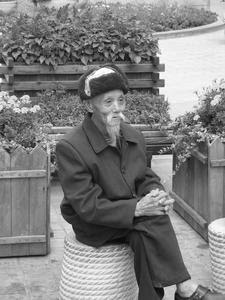
Leventheep keeps himself to himself, although he does make occasional public appearances. The photograph above shows him at an impromptu press conference he gave to announce he’d invented time and was suing the Manx Government for copyright infringement. The case was later thrown out, and Leventheep was forced to pay the costs of both sides of the case.
He can still be found begging in Strand Street to this day.Labels: bicky thwaginsack, crossword, danko billy oofenthwaite, Douglas, Hu Chi Tau Band, humour, isle of man, manx, moirander leventheep, strand street
Written at 17:11 by
G
1
comments |
|
|
|




As usual another superb post.Wonder if the wearing of tartan would be banne in fightlife"
Luiz"
thiet ke nha
nha xinh
duong vat gia da nang"